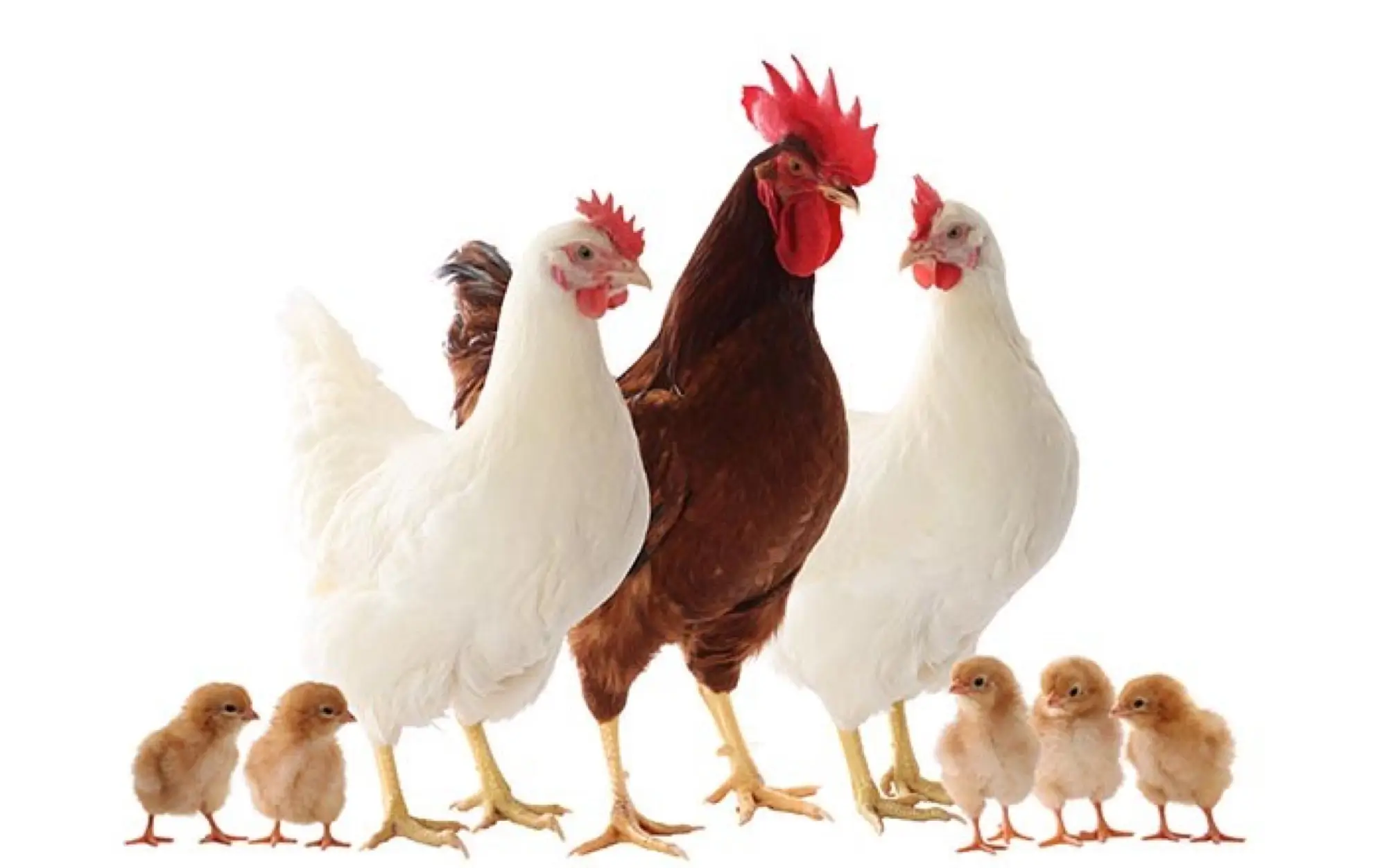
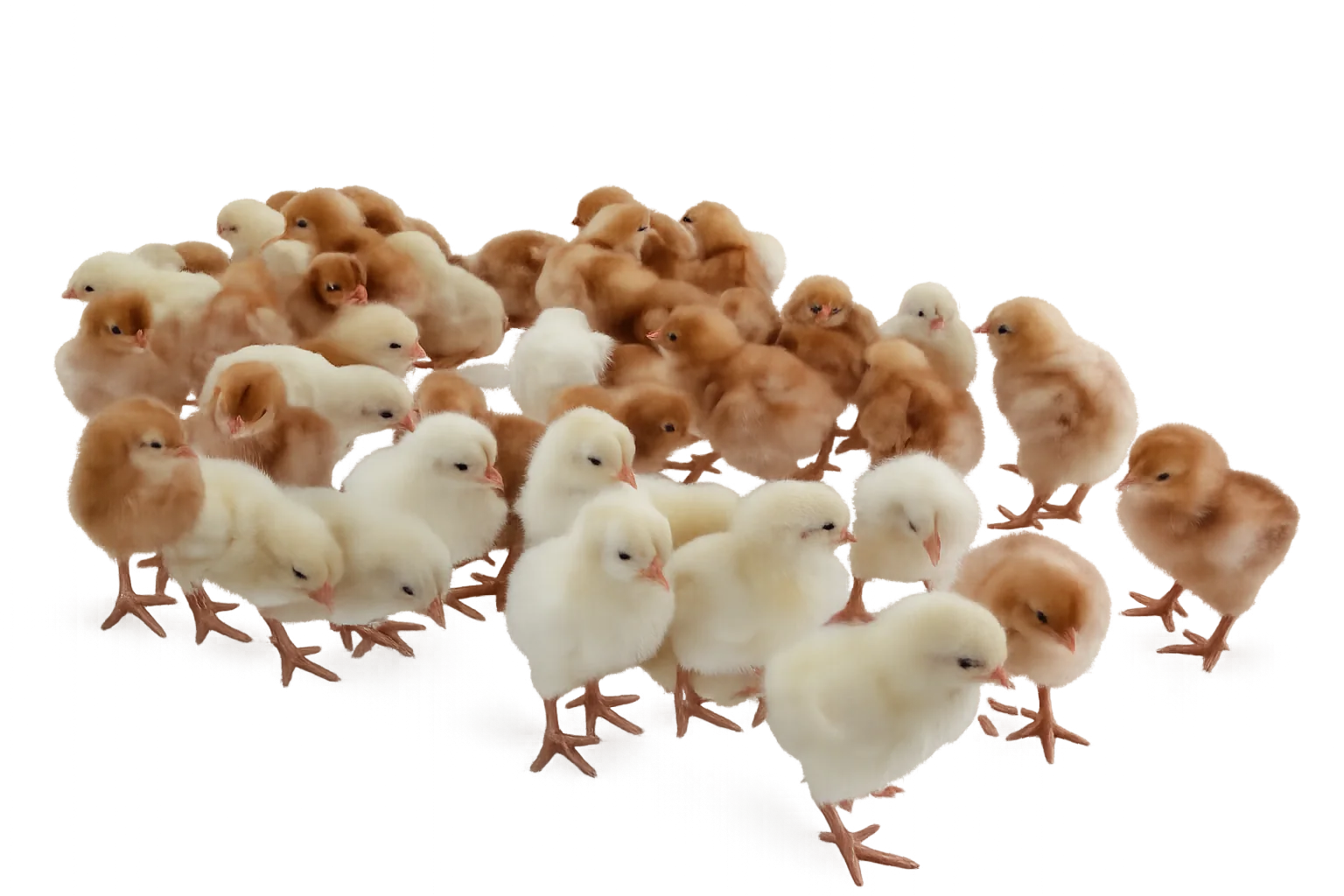
Day-Old Layer Chicks
- A-Grade
- Professionally sexed
- Vaccinated on day one against Marek's Disease, Infectious Bronchitis Disease (IBD) & Newcastle Disease
- Breeds: Lohmann Brown, Hy-Line Brown, Hy-Line Silver
- Beak trimming (IRBT) available on request
A-Grade | Vaccinated | Professionally Sexed.
The future of farming starts here.
4.5+
Star Rating
80%+
Fertility of eggs
100%
A-Grade Stock
Nationwide
Delivery (In SA borders)
Every order leaves the farm A-Grade, healthy and ready to thrive.
We are proudly South African and have been supplying A-Grade, vaccinated, professionally sexed day-old layer chicks nationwide since 2018. We are committed to supporting the growth and success of the poultry industry by ensuring every order is handled with care and efficiency.
 Fully Registered Business
 Stock-In-Transit Insured
 Supplier of Choice
 Assists Emerging Farmers
 Customer Satisfaction
 Advice & Support
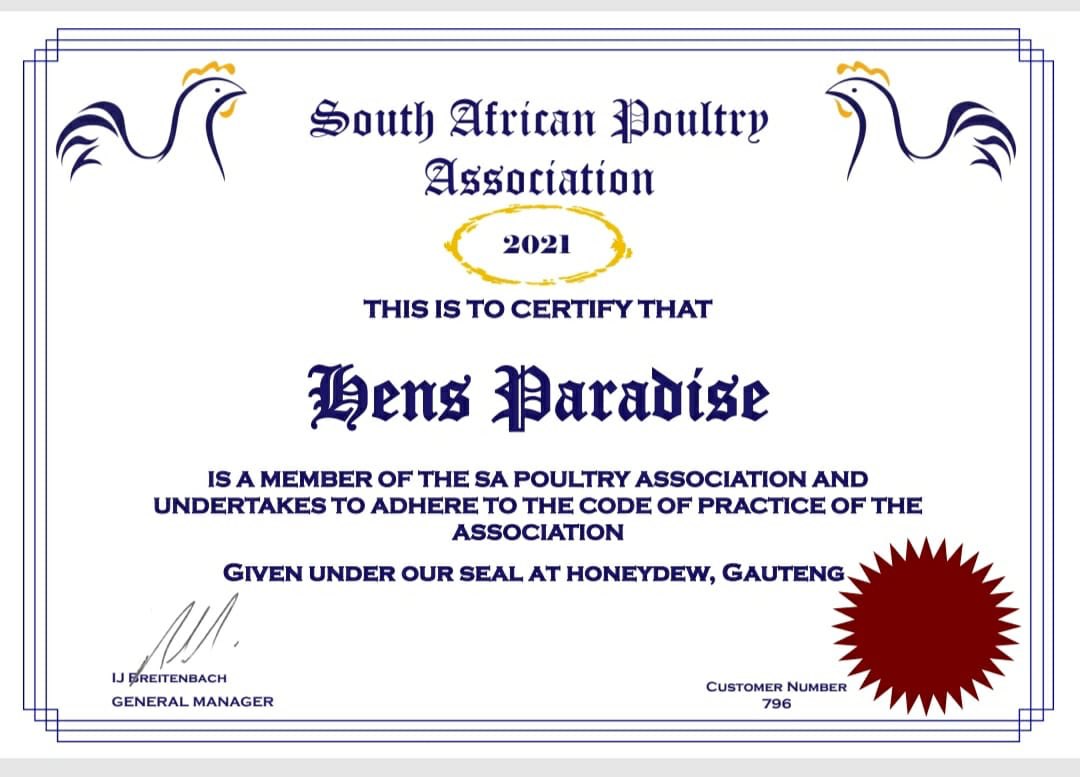
Hens Paradise is a registered and proud member of the South African Poultry Association (SAPA). We strictly adhere to SAPA's code of conduct and industry best practices.
Member of SAPA since 2021
At Hens Paradise, we believe that trust starts with knowing who you’re dealing with. Behind every order is a real person who cares about our customers, our chicks and the service we provide. Meet Harry and Lucy - the people behind the name you can trust.

CEO & Founder
With a passion for poultry and years of experience in the industry, Harry leads Hens Paradise with a strong focus on quality, reliability and putting our customers first. His goal is simple: to provide healthy, quality poultry and a service our customers can trust.

Director
Lucy is one of the friendly faces behind Hens Paradise, working closely with our customers from enquiry to delivery. She is passionate about building lasting relationships and making sure every customer feels supported, informed and confident when ordering from us.
See what our customers are saying about their experience with us, and why they trust Hens Paradise for reliable, healthy stock delivered right to their door.
Read All Our Reviews on GoogleDelivery is charged to the client's account and minimum quantities apply per route. Full details are set out in our terms & conditions.
We deliver the chicks on national roads wherever possible. A delivery date, estimated time and delivery point are confirmed with you in advance. We charge per kilometer travelled.
Your chicks will be securely booked through Airlink and shipped from OR Tambo. We will provide you with a waybill tracking number. Please bring your ID or drivers license and the waybill number to collect your order from your designated airport on the delivery date.
Fertile hatching eggs are collected and delivered by The Courier Guy. A waybill number will be provided for you to track the order.
Day-old layer chicks from the farm, boxed, loaded and on their way to farmers across South Africa.
Need more information or advice on your order? Get in touch and our team will be happy to help.
Monday – Friday: 08:00 – 16:00
Saturday: 08:00 – 13:00
Sunday: Closed
Practical guidance to get your birds off to the best possible start.
To receive a quotation, we require your name, surname, full
physical address and the number of boxes required. This can
be shared from our online order form, or on WhatsApp. Your
quotation will include our official business banking
details, as well as the applicable delivery method (road
transport/airfreight).
Once you are happy to
proceed, payment secures order, and payment should be made
using your name, surname and quotation number as the payment
reference, and proof of payment should be sent to us.
All
relevant delivery arrangements and details will be
communicated to you closer to the scheduled delivery date.
The most common cause is insufficient fresh water. A hen that isn't drinking won't lay, even if she has plenty of feed. Other frequent causes include too little light (hens need 14 to 16 hours a day), stress from predators, overcrowding or noise, a hen going broody, or a natural molt. Because these factors often combine, the best approach is to rule them out one by one, starting with water and light.
Hens need 14 to 16 hours of light per day to trigger the hormone response that produces an egg. In summer this happens naturally. In winter, shorter days mean hens fall below that threshold and production drops. If you need consistent year round output, add artificial light on a timer, roughly a 25W bulb (or 3 to 9W LED) per 9 square metres of coop space.
No. Hens need 8 hours of uninterrupted sleep to stay healthy, and leaving lights on continuously will stress the flock rather than help it. Use a timer to give 14 to 16 hours of light during the day, not around the clock.
Hens bought in autumn or winter often delay the start of laying until daylight hours naturally increase in spring or summer. This is normal and related to light exposure, not a sign of a sick or faulty bird.
Each hen needs about 250ml of fresh, clean water daily, roughly twice her feed intake by weight. A hen drinks first thing in the morning before she eats, so if you notice reduced feeding, check the water supply first. Blocked filters, empty drinkers, or closed taps are common hidden culprits (some medications can clog filters).
Hens need around 140g of good quality layer feed per day, including about 4g of calcium for strong eggshells. Feed should be available ad lib (never limit fed), and extra scraps or treats can dilute the nutritional balance of a proper layer feed, so keep supplementary feeding minimal.
A hen goes "broody" when she's allowed to sit on a nest of uncollected eggs, triggering an instinct to hatch them. Once broody, she'll stop laying for around 21 days, the time it takes an egg to hatch. Prevent this by collecting eggs at least once a day and keeping nesting boxes closed overnight.
Stress is one of the biggest hidden causes of reduced egg production. Common triggers include predators (rats, snakes, and gaps in coop walls or screens), overcrowding (hens need roughly 0.5m² indoors and 0.5 to 1m² outdoors each), and loud or sudden noise, which has been shown to lower egg production and raise stress hormones. Playing calm background music, such as classical music, can help mask stressful noise and support better laying.
Hens can't sweat, so they rely on panting to cool down, and severe heat stress can be fatal as well as reduce egg quantity and quality. Watch for panting, pale combs and wattles, wings held away from the body, and reduced feeding. Mitigate it with constant access to cool water, good shade and ventilation, and enough space to prevent overcrowding.
Hens typically begin laying between 18 and 32 weeks of age, depending on breed, and can lay productively for years. As they age (potentially living to around 10 years), egg frequency drops to one or two per week, and quality declines, with softer shells and smaller eggs becoming more common.
Molting is a natural feather renewal process that happens around 18 months of age and then annually. Because energy goes into growing new feathers rather than making eggs, laying typically pauses for 2 to 4 months. Switching to a higher protein feed during the molt can help, with a return to normal calcium rich layer feed once it's complete.
Yes. Egg theft is often mistaken for a drop in production. Hens can learn to peck and eat their own eggs if nesting boxes aren't provided, predators like snakes, rodents, cats and dogs are drawn to eggs, and eggs left in the open (rather than in proper nesting boxes) are far easier to lose. Frequent collection and secure nesting boxes solve most theft related losses.
Use the "thirds rule." At any given moment, roughly one third of your hens should be resting, one third drinking, and one third feeding. If the balance looks off, check ventilation, water availability, feed access, and possible sources of stress, in that order.